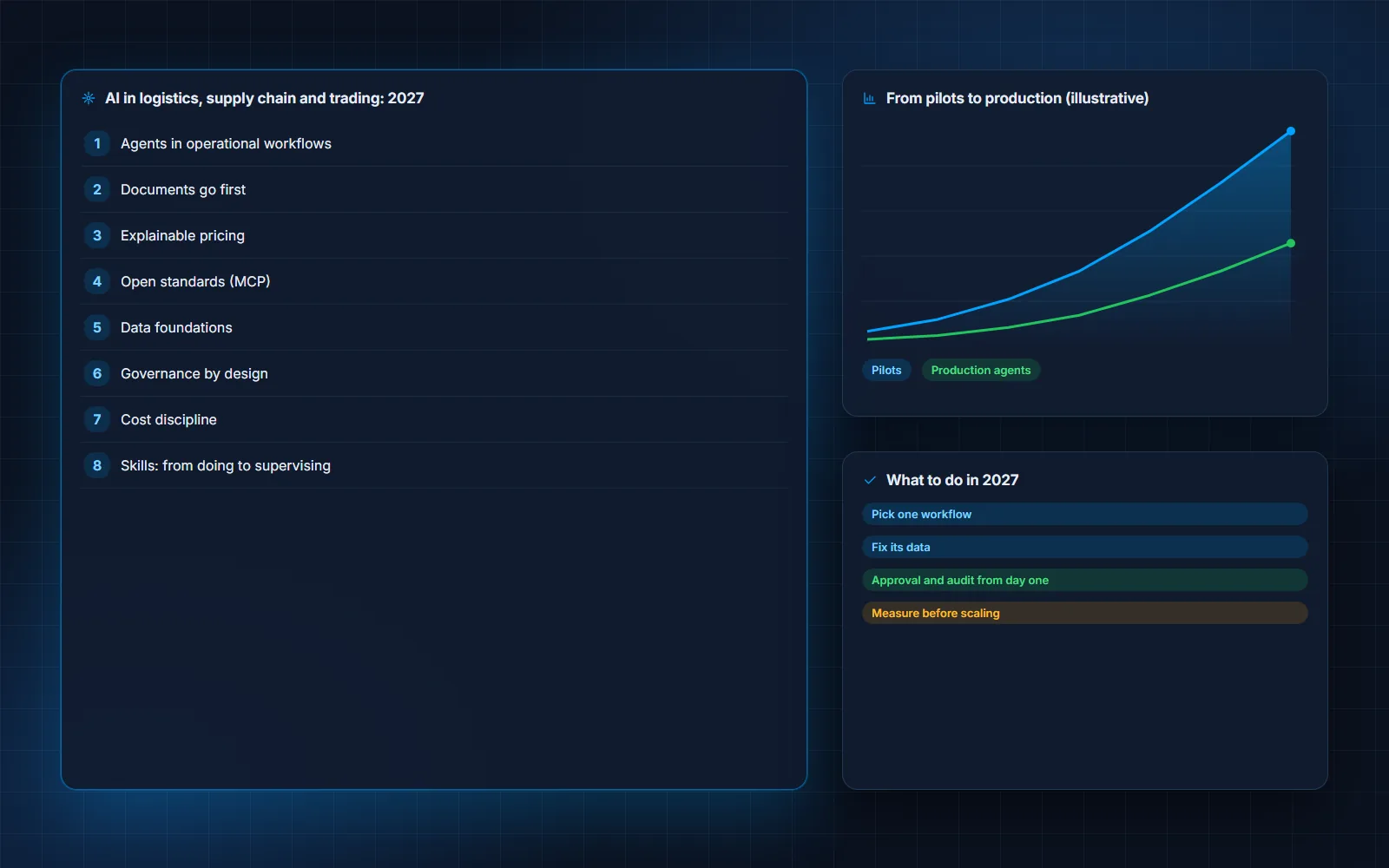
In logistics, supply chain and commodity trading, AI is moving from pilots and chatbots to agents that do real operational work, with people approving the decisions that matter. This is our view of where it is heading in 2027, based on the platforms we build and the conversations we have with operations, pricing and trading teams. It is an outlook, not a survey.
1. Agents move into operational workflows
The question is no longer whether a model can answer a question, but whether an agent can complete a task inside your systems: answer a freight quote, match a confirmation, chase a missing document. Expect the first production agents to target narrow, high-volume workflows with clear rules and measurable time savings.
2. Documents go first
Bills of lading, invoices, certificates, confirmations and contracts are where the most manual effort sits, and where modern AI reads reliably. Document processing will be the most common first AI project in these industries.
3. Pricing becomes explainable
Machine learning has priced freight and capacity for years. The change is explanation: models predict the price, and large language models explain why, using policies and market context. Commercial teams adopt recommendations they can question. We described this pattern in our AI spot pricing design.
4. Open standards connect AI to systems
Protocols such as the Model Context Protocol (MCP) make it easier to give agents controlled access to TMS, ERP and CTRM systems. That reduces custom integration work and makes access easier to govern.
5. Data foundations decide who wins
Agents are only as good as the data they read. Companies that invested in clean master data, reliable market data and integrated operations systems will move fastest; others will find their first AI projects turning into data projects.
6. Governance becomes part of delivery
Customers, auditors and regulations such as the EU AI Act expect evidence: what an AI system did, on which data, and who approved it. Audit trails, evaluation sets and human approval will be built in from the start rather than added later.
7. Cost discipline arrives
As usage grows, model costs become visible. Teams will route simple tasks to smaller, cheaper models, cache results and measure cost per transaction, just as they learned to manage cloud spend.
8. Skills shift from building to supervising
Operations staff will spend less time keying data and more time reviewing exceptions and improving rules. Training people to work with agents will matter as much as the technology itself.
What to do in 2027
- Pick one high-volume workflow and run an agent alongside today’s process.
- Fix the data that workflow depends on.
- Design approval steps and audit trails from day one.
- Measure time saved, accuracy and cost per transaction before scaling.
- Assess where you stand with our free AI readiness assessment.
Frequently asked questions
How is AI used in logistics?
For freight pricing and quotes, shipment tracking and exceptions, document processing, demand forecasting and customer updates, increasingly through AI agents that act in logistics systems.
How is AI used in supply chain management?
To forecast demand, plan inventory and capacity, detect disruptions early, process documents and automate routine supplier and customer communication.
Where does AI help in commodity trading?
Mostly in the middle and back office: confirmation matching, contract checks, market data quality, and explaining P&L and risk movements.
What is the first step?
Choose one measurable workflow, check its data, and run a small proof of value with people approving every decision.
See our AI agent solutions for logistics, trading and finance teams, or talk to us about your first use case.